

For most clean energy companies — especially startups — facilities branding takes a back seat to other priorities. But at what cost?
In 2026, the workplace has become more critical to companies than it’s been since the height of COVID. Every year, more organizations are encouraging employees to come back to the office. There are many reasons for this, from casual interactions that build trust and teamwork to collaborative spaces that spark new ideas and better solutions for customers.

The bottom line is that your workplace is much more than where employees spend their days, and customers occasionally visit. It is the physical, visual, and experiential embodiment of who you are as an organization. It should immediately communicate why customers want to work with you, and why smart, talented people want to work for you.
What is facilities branding?
Communicating your brand at your facility is not about covering every wall with imagery or messaging. It’s not about the size of the logo in your lobby, or if you have a foosball table in your break room. Facilities branding is about how you clearly and effectively communicate the essence of your corporate culture. It powerfully conveys, implicitly and explicitly, the personality, commitment, and integrity of your organization. It showcases a space built to support and nurture community and innovation.
When a facility is branded effectively, it stops being a mere building and starts being a strategic asset that drives performance and loyalty.
Why commercial facilities branding matters
For current employees
A branded environment fosters a sense of belonging and pride. When employees walk into a space that reflects a clear mission, they feel like part of something larger than their daily tasks. This is equally if not especially important for companies with hybrid teams.
- Cultural Reinforcement: Facilities branding acts as a “silent nudge,” reminding staff of the company’s core values without the need for constant corporate memos.
- Boosted Morale: High-quality environmental design—incorporating brand colors, strong photography, and inspiring art walls —improves the psychological atmosphere, leading to higher engagement levels.
For new hires: The ROI of first impressions
The recruitment process is expensive, and competition for top-tier talent is fierce. Facilities branding provides a tangible return on investment in two key ways:
- The “Wow” Factor: A candidate’s decision-making process begins the moment they step through the door. A cohesive, branded space signals stability, professionalism, and a vibrant culture, significantly increasing the “close rate” for high-value hires.
- Accelerated Onboarding: A well-branded facility helps new hires internalize the company culture faster. By immersing them in the brand’s visual and physical story from Day 1, the employee feels culturally aligned almost immediately.

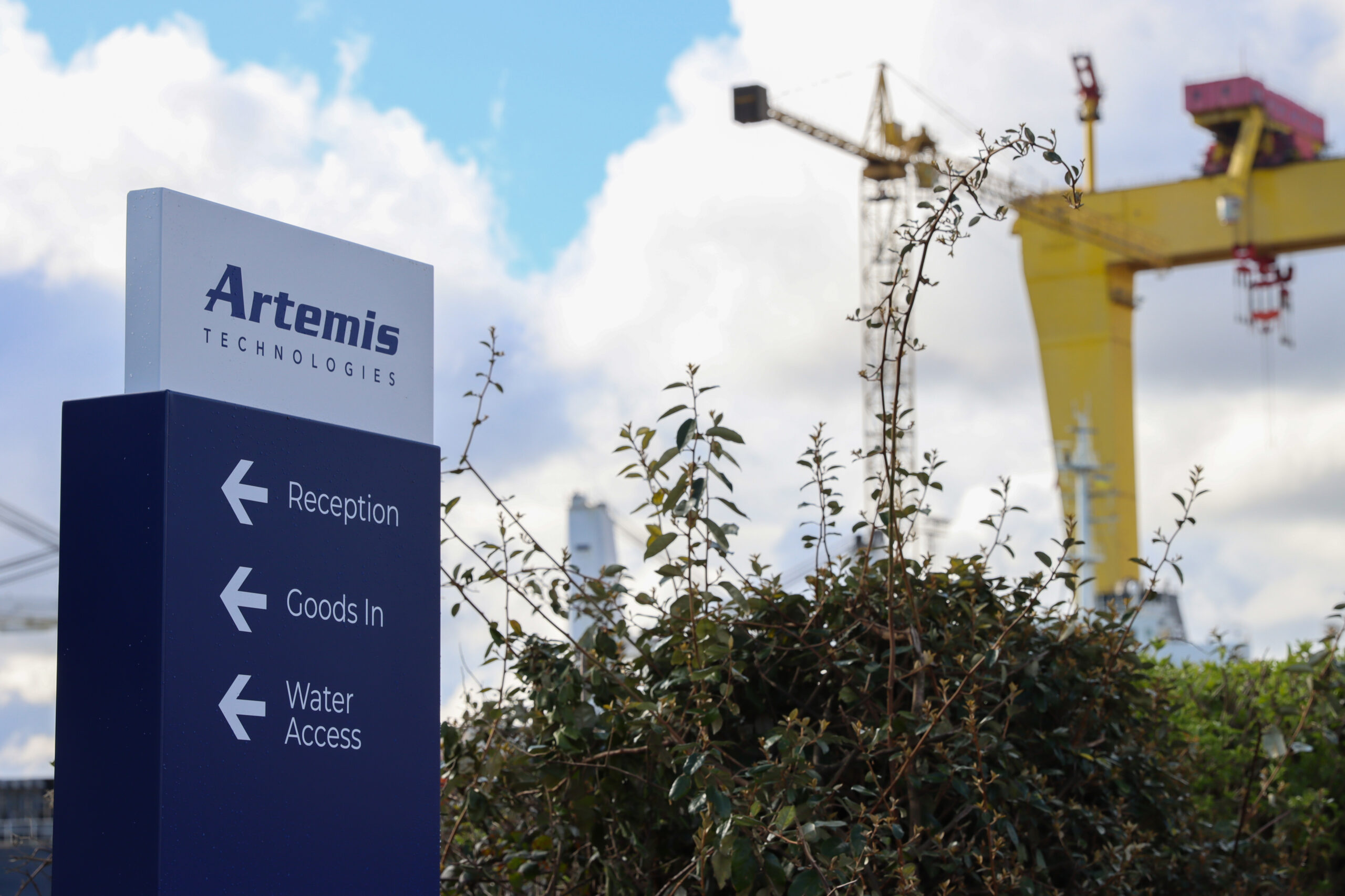
For customers and partners: Do I really want to work with you?
Perhaps one of the most overlooked aspects of facilities branding is the impression that an office space leaves on a visiting customer or partner. Have you ever been to an office where people don’t clean up after themselves? It sends the message that there’s a lack of consideration among employees.
The same could be said of an ineffectively branded office environment. When a customer comes to a meeting room and sees generic art that looks like it’s been in the space since the last company occupied the space, that sends the signal that the new company might not be around that long.
Best practices in branded environments
Effective facilities branding requires a balance between aesthetics and functionality. It should feel organic, not forced – like there are human beings behind the design.
1. Tell a story; don’t just place a logo.
Avoid the “sticker” approach. Instead of simply placing logos on every wall, use environmental graphics to tell the company’s history or showcase its future goals.
Tip: Use a “Legacy Wall” to honor the company’s origins.

This wall of gloves lives on OXO’s head office wall to remind the team working on consumer utensil product design that their customers’ hands are all different.
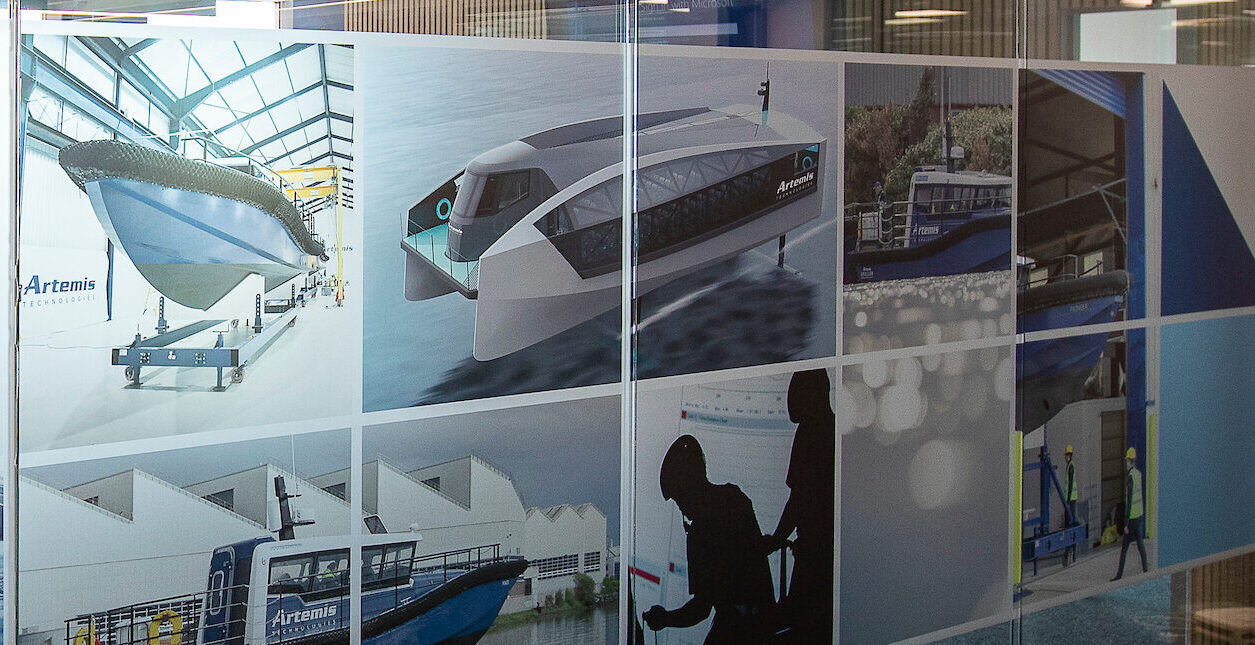
For maritime startup Artemis Technologies, we used their prolific glass walls to celebrate the companies origins, heritage and product development milestones.
2. Prioritize “wayfinding” and zoning.
Branding should help people navigate the space. Use brand-aligned color schemes or typography to distinguish between different zones:
- Collaboration Zones: Bright, energetic colors that stimulate conversation.
- Focus Zones: Subdued, calming tones that encourage deep work.

Tip: Way-finding can have a tone of voice – but only if it matches your company culture. “This way to snacks” is a whimsical way to send people to a break room but is more appropriate for a tech company than a healthcare facility or hospital.
3. Incorporate multi-sensory elements.
True branding goes beyond sight. Consider the materials and textures that represent your brand. A tech company might use sleek glass and industrial metal, while a wellness brand might lean into natural wood and biophilic design (plants and natural light).

4. Be consistent across locations – with local flavor.
For global firms, consistency is key. While a unified corporate identity should be recognizable whether an employee is in Austin, San Francisco, London, or Madrid, it’s important to allow for local cultural expression. Building signage can be a sizable investment, and should be part of a long term plan, so careful planning and alignment to company brand guidelines is essential to avoid costly mistakes.
This Dell logo was made out of 10,000 recycled computer keyboard keys and helped promote the company’s unique commitment to technology recycling.
Bottom line: Invest in aesthetics with a clear purpose
If this all feels expensive, let’s be clear: office spaces don’t have to be posh to be purposeful. Early-stage Sperra Energy put some thought into their location – choosing to office at the San Pedro port where the Ocean Energy Alliance is located. While they could have stuck with the spare industrial environment of a former shipping pier, they chose to repaint and subdivide the space thoughtfully, with brand colors that showed they were in this for the long haul.
Facilities branding is a powerful tool for any organization looking to strengthen its internal culture and improve its bottom line. By investing in the physical workspace, companies do more than just improve aesthetics; they build an environment where employees feel inspired and new talent feels at home. In a world where the “where” of work is constantly evolving, making the “why” visible through design is a competitive advantage that pays dividends in retention, productivity and brand loyalty.

Stay in touch
Get information just like this in your inbox.
Unsubscribe at any time
About the Author

Noel Barnes
Creative Director
Noel Barnes is Creative Director at Clean Power Marketing and an award-winning designer for clean energy brands.